Understand your liver condition, symptoms, causes and advanced treatment options.
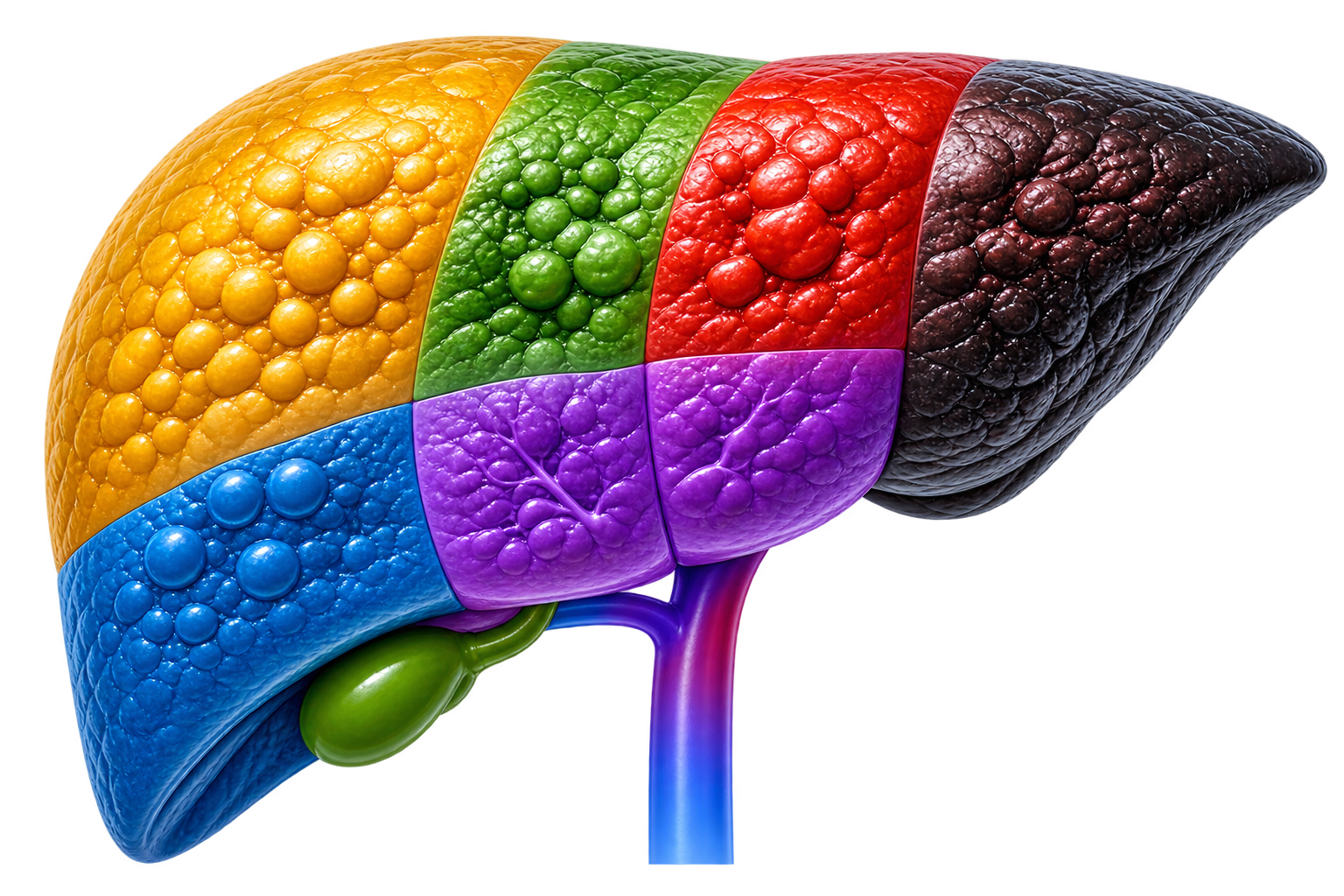
Excess fat build-up in the liver can lead to inflammation and serious complications.
Scarring of the liver tissue due to long-term damage and inflammation.
Liver cancer develops when abnormal liver cells grow uncontrollably and may require carefully planned surgical, interventional, or multidisciplinary treatment.
Cirrhosis is advanced liver scarring caused by long-term liver damage, which can gradually impair liver function and lead to serious complications.
Hepatitis is inflammation of the liver that may result from viral infections, autoimmune conditions, medications, or other causes affecting liver health.
Autoimmune hepatitis is a disease where your immune system attacks your own healthy liver cells, leading to inflammation and potential liver damage.
Liver failure occurs when the liver can no longer perform essential functions, requiring urgent assessment, supportive treatment, and sometimes transplantation.
Gallbladder cancer is a rare and aggressive malignancy that originates in the inner glandular cells of the gallbladder.
Fatty liver occurs when excess fat builds up in the liver, often linked to metabolic health, lifestyle factors (Alcohol), and other underlying conditions.
Bile duct cancer (cholangiocarcinoma) develops in the ducts carrying bile from the liver and may require complex surgery, reconstruction, or cancer-directed treatment.

Not sure which condition applies to you?
Our experts can help you identify the issue and guide you.
Minimally invasive liver surgery for faster recovery and comfort.

Liver transplantation using a healthy liver segment from a donor.

Transplantation using a donated liver from a deceased donor.

Advanced treatments for selected liver tumors without surgery.

Comprehensive assessment to determine suitability for liver transplantation.

Liver Transplant & GI Surgeon | MBBS, MS, DNB (Surgical Gastroenterology)
Laparoscopic liver surgery is a minimally invasive surgical procedure which involves several small incisions that are used in removing abnormal growths or tumors from the liver.
The specific type of laparoscopic liver surgery depends on the location and size of the tumor, as well as the overall health of the patient. Here are some common types:
1. Laparoscopic Liver Resection: Partial Hepatectomy: Removal of a specific segment of the liver. Segmentectomy: Removal of a specific segment of the liver.
2. Laparoscopic Liver Biopsy: Taking a small tissue sample from the liver for diagnosis.
3. Laparoscopic Cyst Removal: Cyst Fenestration: Opening and draining liver cysts. Cyst Excision: Complete removal of liver cysts.
4. Laparoscopic Ablation: Radiofrequency Ablation (RFA): Using radiofrequency energy to heat and destroy abnormal liver tissue, such as tumors. Microwave Ablation (MWA): Using microwave energy to achieve the same purpose as RFA. Cryoablation: Using extreme cold to destroy liver tumors.
5. Laparoscopic Cholecystectomy: Removal of the gallbladder, often performed when gallstones cause inflammation or infection. This is a common procedure that can sometimes involve the liver if there are related complications.
6. Laparoscopic Portal Hypertension Surgery: Procedures like transjugular intrahepatic portosystemic shunt (TIPS) or splenectomy to manage complications of portal hypertension.
7. Laparoscopic Treatment of Liver Trauma: Managing liver injuries due to trauma, including controlling bleeding and repairing liver lacerations.
8. Laparoscopic Management of Liver Abscesses: Draining abscesses that do not respond to antibiotic therapy.
9. Laparoscopic Biliary Surgery: Addressing issues involving the bile ducts, such as bile duct exploration or repair, which can sometimes involve the liver.
10. Laparoscopic Hepatic Cyst Hydatid Surgery: Treating hydatid cysts caused by Echinococcus infection, involving cyst removal or drainage.
These procedures offer the benefits of minimally invasive surgery, including reduced pain, quicker recovery, and smaller scars.
1. Small incisions: The surgeon makes several small incisions in the abdomen that leads to less pain and scarring.
2. Laparoscope: A thin, lighted tube with a camera (laparoscope) is inserted through one of the incisions to provide a clear view of the liver.
3. Surgical instruments: Other small instruments are inserted through the other incisions to perform the surgery.
4. Removal of the affected area: The surgeon carefully removes the diseased part of the liver.
While laparoscopic liver surgery is generally considered less invasive, it’s not suitable for all patients. The decision to proceed with this procedure depends on various factors, including the size and location of the tumor, the overall health of the patient, and the surgeon’s expertise.
1. Reduced Pain: Smaller incisions result in less post-operative pain compared to open surgery.
2. Faster Recovery: Patients typically experience a quicker recovery time and shorter hospital stay.
3. Smaller Scars: Minimally invasive approach leads to smaller and less noticeable scars.
4. Lower Risk of Infection: Smaller wounds reduce the risk of infection and other complications.
While laparoscopic surgery is generally considered safe and offers many benefits compared to traditional open surgery, it is not without risks. Here are some potential risks and complications associated with laparoscopic surgery.
1. As with any surgery, there are risks, including bleeding, infection, and injury to surrounding organs.
2. Laparoscopic liver surgery may not be suitable for all patients, particularly those with large tumors, extensive liver disease, or certain anatomical considerations.
3. Conversion to open surgery might be necessary if complications arise during the procedure.
Laparoscopic liver surgery is a specialized and advanced technique that requires significant expertise. It offers many benefits to patients, including reduced pain, faster recovery, and smaller scars, making it a preferred option for many liver-related surgeries when appropriate.
Laparoscopic surgery, often referred to as minimally invasive surgery, is different from open surgery in several key ways:
| Laparoscopic Surgery | Open Surgery | |
| Incisions | Involves small incisions (usually 0.5-1 cm) through which a camera and surgical instruments are inserted. | Requires larger incisions to directly access the area being operated on. |
| Visualization | Uses a laparoscope (a long, thin camera) to provide a video feed to a monitor, allowing the surgeon to see inside the patient’s body. | Surgeons have a direct line of sight and access to the organs. |
| Recovery | Generally, patients experience less pain, shorter hospital stays, and quicker recovery times. | Longer hospital stays and recovery times are typical. |
| Scarring | Minimal scarring due to smaller incisions. | More significant scarring due to larger incisions. |
| Complications | Reduced risk of infection and other complications compared to open surgery | Higher risk of infections and complications due to larger wounds. |
Yes, laparoscopic surgery can be performed for liver cancer. In fact, it’s becoming an increasingly preferred method for suitable candidates. It is less painful and small scarring. Patients often return to normal activities sooner. It is suitable during early-stage of liver cancer when there are small, single tumors. Patient must have overall good health. And the surgeon must have expertise in laparoscopic liver surgery.
It also has few limitations, like:
However, not all liver cancers are suitable for laparoscopic surgery. For more advanced or complicated cases of liver cancer, open surgery may be necessary to ensure complete removal of the cancerous tissue. It is crucial to consult with a liver specialist to determine whether you’re a suitable candidate for laparoscopic liver surgery or not.
Understand your liver condition, symptoms, causes and advanced treatment options.
Excess fat build-up in the liver can lead to inflammation and serious complications.
Scarring of the liver tissue due to long-term damage and inflammation.
Liver cancer develops when abnormal liver cells grow uncontrollably and may require carefully planned surgical, interventional, or multidisciplinary treatment.
Cirrhosis is advanced liver scarring caused by long-term liver damage, which can gradually impair liver function and lead to serious complications.
Hepatitis is inflammation of the liver that may result from viral infections, autoimmune conditions, medications, or other causes affecting liver health.
Autoimmune hepatitis is a disease where your immune system attacks your own healthy liver cells, leading to inflammation and potential liver damage.
Liver failure occurs when the liver can no longer perform essential functions, requiring urgent assessment, supportive treatment, and sometimes transplantation.
Gallbladder cancer is a rare and aggressive malignancy that originates in the inner glandular cells of the gallbladder.
Fatty liver occurs when excess fat builds up in the liver, often linked to metabolic health, lifestyle factors (Alcohol), and other underlying conditions.
Bile duct cancer (cholangiocarcinoma) develops in the ducts carrying bile from the liver and may require complex surgery, reconstruction, or cancer-directed treatment.
Not sure which condition applies to you?
Our experts can help you identify the issue and guide you.