Understand your liver condition, symptoms, causes and advanced treatment options.
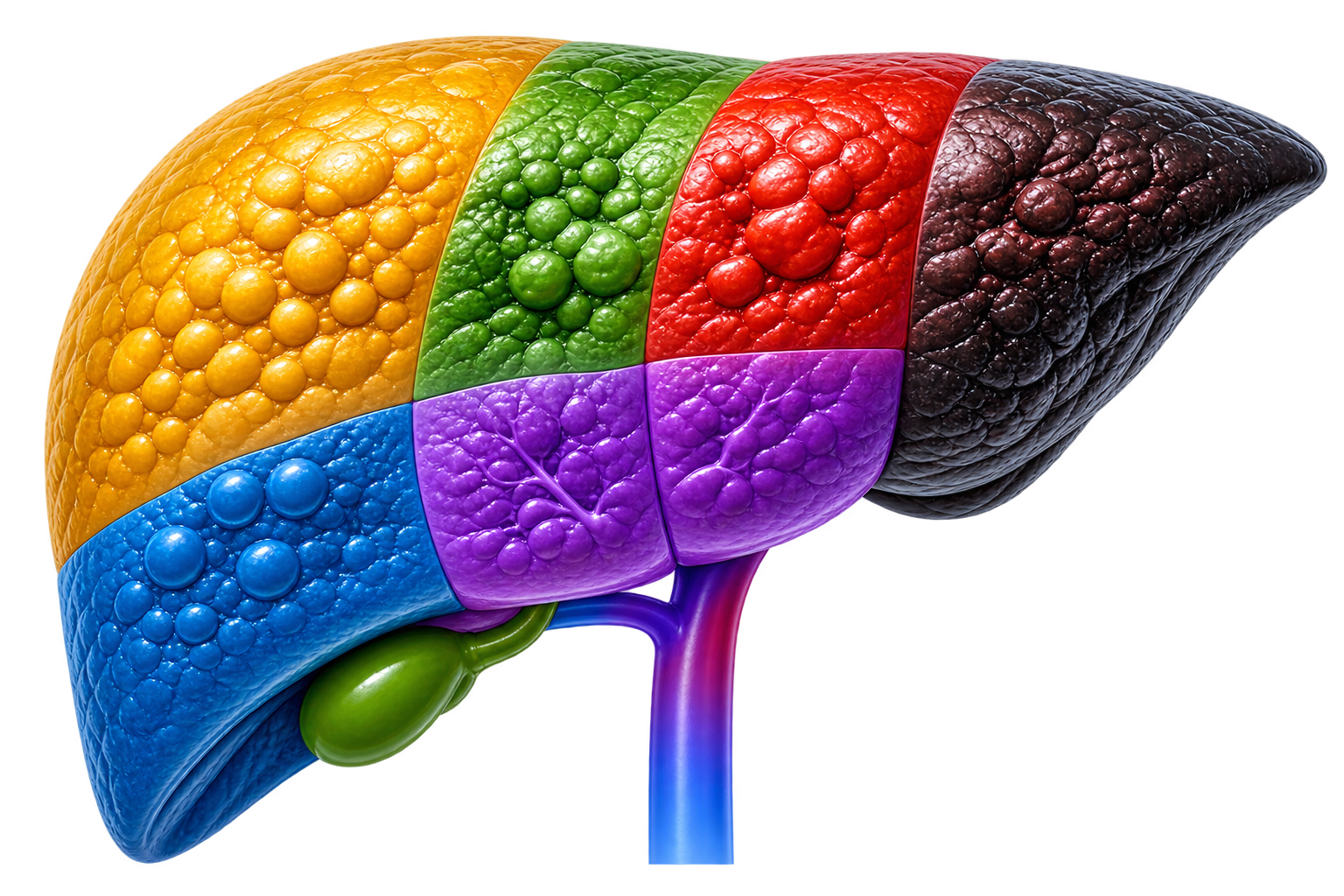
Excess fat build-up in the liver can lead to inflammation and serious complications.
Scarring of the liver tissue due to long-term damage and inflammation.
Liver cancer develops when abnormal liver cells grow uncontrollably and may require carefully planned surgical, interventional, or multidisciplinary treatment.
Cirrhosis is advanced liver scarring caused by long-term liver damage, which can gradually impair liver function and lead to serious complications.
Hepatitis is inflammation of the liver that may result from viral infections, autoimmune conditions, medications, or other causes affecting liver health.
Autoimmune hepatitis is a disease where your immune system attacks your own healthy liver cells, leading to inflammation and potential liver damage.
Liver failure occurs when the liver can no longer perform essential functions, requiring urgent assessment, supportive treatment, and sometimes transplantation.
Gallbladder cancer is a rare and aggressive malignancy that originates in the inner glandular cells of the gallbladder.
Fatty liver occurs when excess fat builds up in the liver, often linked to metabolic health, lifestyle factors (Alcohol), and other underlying conditions.
Bile duct cancer (cholangiocarcinoma) develops in the ducts carrying bile from the liver and may require complex surgery, reconstruction, or cancer-directed treatment.

Not sure which condition applies to you?
Our experts can help you identify the issue and guide you.
Minimally invasive liver surgery for faster recovery and comfort.

Liver transplantation using a healthy liver segment from a donor.

Transplantation using a donated liver from a deceased donor.

Advanced treatments for selected liver tumors without surgery.

Comprehensive assessment to determine suitability for liver transplantation.
Liver Transplant & GI Surgeon | MBBS, MS, DNB (Surgical Gastroenterology)
The bile ducts are a network of small tubes that carry bile from the liver and gallbladder to the intestine. When these ducts become blocked, narrowed, inflamed or affected by a tumour, bile flow can be disrupted and the liver can be affected.
Bile duct diseases can range from treatable benign conditions to complex cancers. Early diagnosis and the right specialist care can make an important difference.
At Arise Liver, bile duct conditions are evaluated as part of comprehensive hepatobiliary and pancreatic (HPB) care, with treatment tailored to the cause, location and severity of the disease.
Bile ducts are channels that transport bile produced by the liver toward the intestine.
Bile helps the body digest fats and eliminate certain waste products.
When bile ducts are functioning normally, bile flows freely. But a blockage, narrowing, inflammation or abnormal growth can interfere with this flow.
Bile duct problem → Reduced bile flow → Bile buildup → Jaundice and other complications
Some conditions are relatively simple to treat, while others require advanced endoscopic or surgical management.
Bile duct disease is not one single condition.
It includes several disorders affecting the bile ducts, ranging from stones and strictures to infections and cancers.
The appropriate treatment depends on the underlying cause and the location of the disease.
Bile duct disorders can develop for different reasons.
Gallstones: Stones can move into and obstruct the common bile duct.
Bile Duct Strictures: Abnormal narrowing can restrict the normal flow of bile.
Inflammation or Infection: Inflammation or infection of the bile ducts can interfere with bile drainage.
Previous Surgery: Bile duct injury or scarring can sometimes occur after abdominal or biliary surgery.
Tumours: Growths in or around the bile ducts can obstruct bile flow.
Congenital Conditions: Some bile duct abnormalities may be present from birth.
Symptoms vary depending on the underlying condition.
Yellowing of the eyes or skin can occur when bile cannot drain normally.
Do not ignore unexplained jaundice.
It can have several causes, including bile duct obstruction, liver disease and other conditions that require medical evaluation.
A bile duct obstruction occurs when something blocks the normal passage of bile.
Possible causes include:
A blockage can cause bile to build up, potentially resulting in jaundice, itching, abdominal discomfort or infection.
Finding the cause of the obstruction is the first step toward choosing the right treatment.
A biliary stricture is an abnormal narrowing of a bile duct.
It may develop because of:
Treatment depends on the location and cause of the narrowing. Some benign biliary strictures can be managed using non-surgical endoscopic procedures, while complex cases may require surgical reconstruction.
Gallstones can sometimes enter the common bile duct and obstruct bile flow.
Pain → Jaundice → Infection → Bile flow obstruction
CBD stones can often be managed with endoscopic treatment, depending on the patient’s condition and the location of the stone.
Cholangitis is an infection involving the bile ducts, often associated with impaired bile drainage.
Possible symptoms include:
Because an infection associated with bile duct obstruction can become serious, prompt medical assessment is important.
Bile duct cancer, also called cholangiocarcinoma, develops from cells lining the bile ducts.
It can occur in different locations within the biliary system, making diagnosis and treatment complex.
Possible warning signs include:
Bile duct cancers can involve important blood vessels, the liver, gallbladder and surrounding structures.
When the tumour is surgically removable, surgery is the main curative treatment option. Depending on the tumour’s location and extent, surgery may involve removal of the affected bile duct, part of the liver and reconstruction of bile drainage.
For cancers that cannot be completely removed surgically, treatment focuses on controlling disease progression and managing symptoms through an individualized cancer-care plan.
Finding the exact cause is essential because different bile duct conditions require different treatments.
Blood Tests: Liver function and other blood tests can provide important clues about bile flow and liver health.
Ultrasound: Often used as an initial imaging test to look for bile duct or gallbladder abnormalities.
CT Scan: Provides detailed images of the liver, bile ducts and surrounding structures.
MRI / MRCP: Can provide detailed images of the biliary system and help identify obstruction or narrowing.
Endoscopic Evaluation: Selected patients may require endoscopic procedures for diagnosis and treatment.
Multidisciplinary Assessment: Complex biliary and cancer cases may require evaluation by liver surgeons, gastroenterologists, oncologists, interventional radiologists and other specialists. Arise Liver describes a multidisciplinary approach for complex hepatobiliary cancers.
There is no single treatment for every bile duct condition.
Endoscopic Treatment: Selected bile duct stones and benign strictures can be treated through minimally invasive endoscopic procedures.
Bile Duct Surgery: Complex strictures, tumours and other structural problems may require surgery.
Liver & Biliary Surgery: When disease involves both the bile ducts and liver, specialized hepatobiliary surgery may be required.
Bile Duct Reconstruction: In selected cases, the diseased section of the bile duct is removed and bile drainage is reconstructed using the intestine.
Cancer Treatment: Depending on the stage and operability of the cancer, treatment may involve surgery and other cancer-directed therapies.
Bile duct diseases can sit at the intersection of the liver, gallbladder, pancreas and digestive system.
Complex conditions therefore benefit from specialists experienced in hepatobiliary and pancreatic surgery.
At Arise Liver, HPB care includes evaluation and management of diseases involving the liver, bile duct, gallbladder and pancreas, with advanced imaging and multidisciplinary assessment used for complex cases.
Comprehensive Evaluation: Understand the exact location and nature of your bile duct problem.
Individualized Treatment: Treatment is planned around the underlying condition, disease extent and overall health.
Advanced Surgical Expertise: Complex biliary and HPB conditions may require specialized surgical expertise.
Multidisciplinary Care: Complex cancers can be reviewed by a team involving surgeons, gastroenterologists, oncologists and interventional specialists.
Seek medical evaluation if you experience:
The sooner the cause is identified, the sooner an appropriate treatment pathway can be planned.
A bile duct problem may begin with something as simple as a stone—or it may signal a more complex condition requiring specialized HPB care.
Don’t treat the symptom alone. Find the cause.
At Arise Liver, the focus is on accurate diagnosis, individualized treatment and specialized care for complex liver and biliary conditions.
Consult Dr. Punit Singla for specialized liver, biliary and HPB care.
Bile duct diseases are conditions affecting the tubes that carry bile from the liver and gallbladder to the intestine. They include stones, strictures, inflammation, obstruction and cancers.
Jaundice, dark urine, pale stools, itching, abdominal pain, fever and nausea can occur depending on the underlying condition.
A blocked bile duct requires medical evaluation because prolonged obstruction can cause complications, including infection and impaired bile drainage.
Common causes include bile duct stones, strictures, inflammation, previous surgery and tumours.
A biliary stricture is a narrowing of a bile duct that can interfere with normal bile flow.
Bile duct cancer, or cholangiocarcinoma, is a cancer arising from the cells lining the bile ducts.
Some bile duct cancers can be surgically removed. The type and extent of surgery depend on the tumour’s location and whether it can be completely removed.
Depending on the condition, care may involve a gastroenterologist, hepatologist, HPB surgeon, oncologist or a multidisciplinary liver and biliary team.
Unexplained jaundice, persistent abdominal symptoms, abnormal liver tests or imaging showing bile duct abnormalities should be evaluated by an appropriate specialist.
Understand your liver condition, symptoms, causes and advanced treatment options.
Excess fat build-up in the liver can lead to inflammation and serious complications.
Scarring of the liver tissue due to long-term damage and inflammation.
Liver cancer develops when abnormal liver cells grow uncontrollably and may require carefully planned surgical, interventional, or multidisciplinary treatment.
Cirrhosis is advanced liver scarring caused by long-term liver damage, which can gradually impair liver function and lead to serious complications.
Hepatitis is inflammation of the liver that may result from viral infections, autoimmune conditions, medications, or other causes affecting liver health.
Autoimmune hepatitis is a disease where your immune system attacks your own healthy liver cells, leading to inflammation and potential liver damage.
Liver failure occurs when the liver can no longer perform essential functions, requiring urgent assessment, supportive treatment, and sometimes transplantation.
Gallbladder cancer is a rare and aggressive malignancy that originates in the inner glandular cells of the gallbladder.
Fatty liver occurs when excess fat builds up in the liver, often linked to metabolic health, lifestyle factors (Alcohol), and other underlying conditions.
Bile duct cancer (cholangiocarcinoma) develops in the ducts carrying bile from the liver and may require complex surgery, reconstruction, or cancer-directed treatment.
Not sure which condition applies to you?
Our experts can help you identify the issue and guide you.