Item #1

Banner Title

Lorem Ipsum is simply dumy text of the printing typesetting industry lorem ipsum.

Edit Template

Difficulty in Swallowing (Achalasia Cardia)

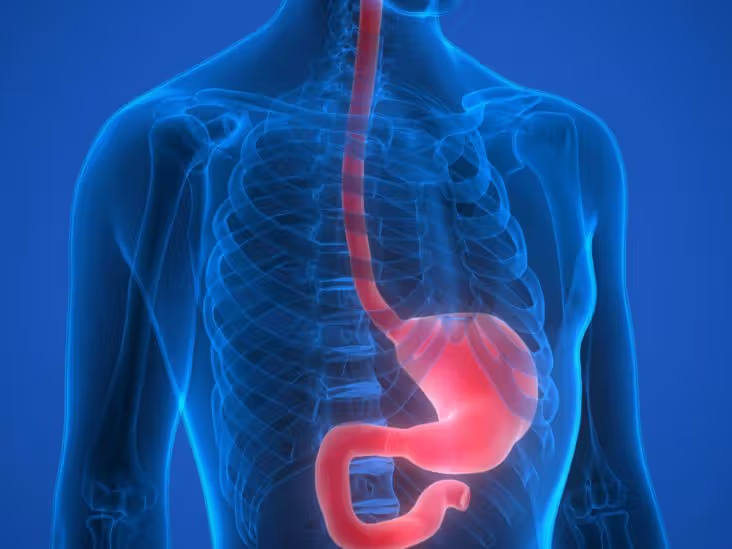
Difficulty in swallowing can quietly disrupt everyday life. Meals become stressful, eating takes longer, and even drinking water may feel uncomfortable. One of the important causes of persistent swallowing difficulty is Achalasia Cardia, a rare esophageal motility disorder that affects the normal movement of food from the food pipe into the stomach.

Dr. Nishant Kurian, Consultant in the Department of Surgical Gastroenterology at PSRI Hospital, Saket, Delhi, provides patients advanced evaluation and minimally invasive surgical care options for complex swallowing disorders, including achalasia cardia.

What is Achalasia Cardia?

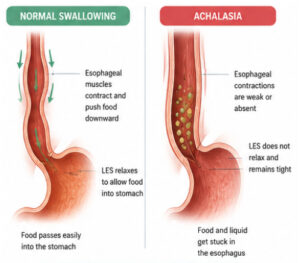
Achalasia is a condition in which the lower end of the esophagus (food pipe) fails to relax properly during swallowing. Meanwhile, the lower esophageal sphincter (LES), a muscular ring at the lower end of the esophagus, fails to relax properly, preventing food from passing easily into the stomach. As a result, food and liquids remain stuck inside the esophagus, causing progressive swallowing difficulty.

This condition is also known as an esophageal motility disorder, and it can gradually affect nutrition, quality of life, and overall digestive health if left untreated.
Common Symptoms of Achalasia Cardia

Patients with achalasia may experience symptoms that slowly worsen over time, including:

Many patients are initially treated for acidity or GERD before the correct diagnosis is made. In GERD, the lower esophageal sphincter (LES) becomes weak or overly relaxed, allowing stomach acid to flow back into the esophagus. In Achalasia, the LES fails to relax properly and remains abnormally tight, preventing food and liquids from passing easily into the stomach.

Causes of Achalasia

The exact cause of achalasia cardia is not fully understood. It is believed to occur due to damage to the nerves controlling the esophageal muscles and lower esophageal sphincter. This leads to failure of relaxation and impaired food movement. Some researches also suggest evidence of a relationship between Achalasia and viral infections.

How is Achalasia Diagnosed?

Accurate diagnosis is essential before planning the right achalasia surgery treatment. Common investigations include:

  • Upper GI Endoscopy: Used to examine the food pipe and rule out blockage, tumors, or other causes of dysphagia. During endoscopy, your doctor may perform a biopsy or remove abnormal tissue for further analysis.
  • Barium Swallow Test: During this test, patients swallow small amounts of barium and movement of barium is tracked in the lower esophagus. The X-ray study shows the classic “bird-beak” narrowing seen in achalasia.
  • Esophageal Manometry: Considered the gold standard test, manometry measures pressure and movement inside the esophagus and confirms the diagnosis of achalasia.

Treatment Options for Achalasia Cardia

The goal of treatment is to reduce the tightness of the lower esophageal sphincter and improve swallowing.

Non-Surgical Treatments

Medications: Certain medicines may provide temporary relief by relaxing the esophageal muscles, although long-term results are usually limited.

POEM (Per Oral Endoscopic Myotomy): An advanced minimally invasive endoscopic procedure performed through the mouth to cut the tight esophageal muscle.

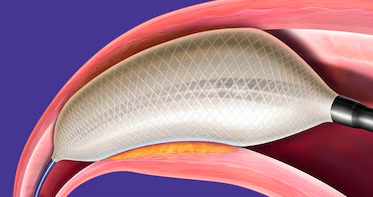
Balloon Dilatation: A special balloon is used to stretch the narrowed area of the esophagus. While effective in some patients, symptoms may recur over time.

Recent studies suggest that POEM offers better and more durable symptom relief compared to balloon dilatation. While balloon dilatation can be effective in some patients, it carries a risk of excessive tearing of the esophageal muscle, which may lead to perforation, a potentially serious complication.

Laparoscopic Heller’s Myotomy for Achalasia

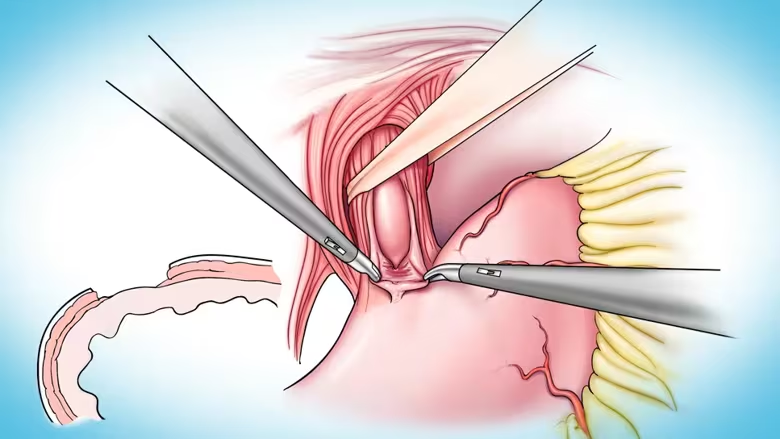
For many patients, Laparoscopic Heller’s Myotomy is considered one of the most effective and durable treatment options for achalasia cardia.

This minimally invasive achalasia surgery involves carefully cutting the tight lower esophageal muscle to allow food to pass smoothly into the stomach. The procedure is usually combined with a partial anti-reflux procedure (fundoplication) to reduce the risk of acid reflux after surgery.

Benefits of Laparoscopic Heller Myotomy

Patients searching for the best treatment for achalasia cardia, dysphagia surgery treatment, or an experienced Heller myotomy surgeon can benefit from Dr.Kurian’s advanced laparoscopic approach.

Why Choose Dr. Nishant Kurian?

Dr. Nishant Kurian is an advanced GI and laparoscopic surgeon with expertise in treating complex esophageal and swallowing disorders.

Patients looking for:

can benefit from a comprehensive evaluation and personalized surgical care under Dr. Nishant Kurian.

Recovery After Achalasia Surgery

Most patients are able to resume liquids shortly after surgery and gradually return to a normal diet over the next few weeks. Long-term outcomes after laparoscopic Heller myotomy are generally excellent, with significant improvement in swallowing symptoms.

Frequently Asked Questions

1

Is achalasia cardia curable?

Achalasia is a chronic condition, but treatment can effectively relieve symptoms and significantly improve swallowing and quality of life.

2

What is the best treatment for achalasia cardia?

Laparoscopic Heller’s Myotomy and POEM are among the most effective treatments for long-term symptom relief. The best option depends on the patient’s condition and evaluation.

3

Is laparoscopic Heller myotomy safe?

Yes. When performed by an experienced Heller myotomy specialist, it is considered a safe and highly effective minimally invasive procedure.

4

How long does recovery take after achalasia surgery?

Most patients recover within a few weeks and can gradually return to normal eating habits under medical guidance.

5

Can achalasia come back after treatment?

Some patients may experience recurrence of symptoms over time, but long-term outcomes after surgery are generally very good.

6

When should I see a doctor for swallowing difficulty?

Persistent difficulty swallowing, regurgitation, unexplained weight loss, or chest discomfort should always be evaluated by a dysphagia specialist doctor or GI surgeon.

Don’t ignore persistent pain, digestive discomfort, or hernia-related symptoms

Experience advanced laparoscopic, robotic, and gastrointestinal surgical care with Dr. Nishant Kurian, focused on precision treatment, faster recovery, and better patient outcomes.

Book An Appointment

Advanced Onco, GI Laparoscopic and Robotic Surgery in Delhi

PSRI HOSPITAL, SHEIKH SARAI PHASE 2, SAKET, NEW DELHI

drnishantkurian85@gmail.com

+91-9220878969

© 2026 www.drnishantkurian.com


    This will close in 20 seconds

    Schedule Appointment


      This will close in 0 seconds

      Call Now Button