Item #1

Banner Title

Lorem Ipsum is simply dumy text of the printing typesetting industry lorem ipsum.

Edit Template

Malrotation of Intestine: Treatment in Delhi | Laparoscopic Ladd’s Procedure by Dr. Nishant Kurian

Expert Treatment for Intestinal Malrotation with Advanced Laparoscopic Surgery

Intestinal malrotation is a congenital condition in which the intestines do not rotate and position themselves normally during fetal development. Although it is commonly diagnosed in newborns and infants, some patients remain undiagnosed until adolescence or adulthood, where they may suffer from recurrent abdominal pain, vomiting, intestinal obstruction, or even life-threatening bowel volvulus.

Timely diagnosis and appropriate surgical correction are essential to prevent serious complications such as bowel ischemia, intestinal necrosis, and recurrent obstruction.

Dr. Nishant Kurian specializes in the diagnosis and intestinal malrotation treatment using advanced minimally invasive techniques, including the Laparoscopic Ladd’s Procedure, offering patients faster recovery, smaller scars, reduced postoperative pain, and excellent long-term outcomes.

What is Intestinal Malrotation?

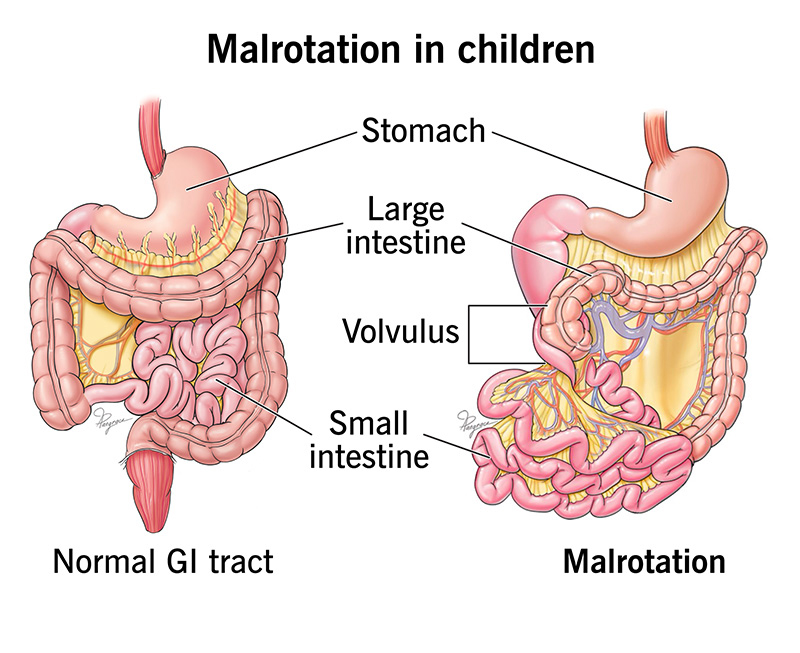
Intestinal malrotation is a developmental abnormality that occurs before birth when the intestines fail to complete their normal rotation inside the abdomen.

As a result:
  • The intestines remain abnormally positioned.
  • The mesentery (supporting tissue of the intestine) remains narrow.
  • The bowel becomes vulnerable to twisting around itself, known as volvulus.
  • Fibrous tissue bands called Ladd’s bands may compress the duodenum and cause intestinal blockage.

This condition can range from mild intermittent symptoms to a surgical emergency requiring immediate intervention.

Why is Intestinal Malrotation Dangerous?

The greatest risk associated with malrotation is midgut volvulus, a condition in which the intestine twists around its blood supply.

When this occurs:
  • Blood flow to the intestine may become compromised.
  • The bowel can rapidly become ischemic.
  • Tissue death (necrosis) may occur.
  • Emergency surgery becomes necessary to save the intestine and the patient’s life.

Early diagnosis and definitive malrotation of intestine surgery significantly reduce these risks.

Causes of Intestinal Malrotation

Intestinal malrotation develops during fetal growth when the intestines fail to rotate and fix into their normal anatomical position.

While the exact cause remains unclear, it is associated with:
  • Congenital developmental abnormalities
  • Abdominal wall defects
  • Congenital diaphragmatic hernia
  • Heterotaxy syndromes
  • Other gastrointestinal developmental disorders

The condition is present from birth, even if symptoms appear later in life.

Symptoms of Intestinal Malrotation

Symptoms vary depending on age and the degree of intestinal obstruction.

Symptoms in Infants
  • Green or bilious vomiting
  • Feeding intolerance
  • Abdominal swelling
  • Excessive crying
  • Failure to thrive
  • Blood in stools
Symptoms in Older Children and Adults
  • Recurrent abdominal pain
  • Chronic digestive discomfort
  • Intermittent vomiting
  • Bloating after meals
  • Nausea
  • Unexplained weight loss
  • Episodes of intestinal obstruction
  • Sudden severe abdominal pain due to volvulus

When Should You See a Specialist?

Immediate consultation with a GI surgeon for malrotation in Delhi is recommended if you experience:
  • Persistent abdominal pain
  • Recurrent vomiting
  • Unexplained digestive symptoms
  • Episodes of bowel obstruction
  • Sudden severe abdominal pain

Prompt evaluation can help prevent complications and avoid emergency surgery.

How is Intestinal Malrotation Diagnosed?

Diagnosis requires a combination of clinical assessment and advanced imaging studies. Common Diagnostic Tests Include:
  • Upper GI Contrast Study: Considered one of the most reliable investigations for identifying abnormal intestinal positioning and duodenal obstruction.
  • CT Scan of the Abdomen: In case there are signs of malrotation, doctors may use a CT scan to check for a blockage in one of the intestines.
  • Abdominal Ultrasound: May identify abnormal positioning of mesenteric vessels and signs of volvulus.
  • X-rays: Can reveal evidence of intestinal obstruction.

Accurate diagnosis is crucial for planning the most appropriate midgut malrotation surgery.

Treatment for Intestinal Malrotation

The definitive treatment for symptomatic malrotation is surgery.

The standard operation worldwide is known as Ladd’s Procedure Surgery, designed to correct abnormal anatomy, relieve obstruction, and reduce the risk of future volvulus.

Ladd’s Procedure Surgery

The Ladd’s procedure surgery is performed to:
  • Untwist the bowel if volvulus is present
  • Divide obstructing Ladd’s bands
  • Widen the mesenteric base
  • Reposition the intestines into a safer configuration
  • Remove the appendix to avoid future diagnostic confusion

The objective is not necessarily to restore normal anatomy but to prevent future twisting and intestinal compromise.

Laparoscopic Ladd’s Procedure

Dr. Nishant Kurian offers advanced Laparoscopic Ladd’s Procedure for suitable patients.

This modern approach uses small keyhole incisions and high-definition laparoscopic instruments to perform the surgery with exceptional precision.

Benefits of Laparoscopic Surgery for Intestinal Malrotation
  • Smaller incisions
  • Less postoperative pain
  • Reduced blood loss
  • Faster recovery
  • Earlier return to normal activities
  • Lower risk of wound complications
  • Better cosmetic outcomes

Several studies have demonstrated that laparoscopic surgery for intestinal malrotation provides excellent results in appropriately selected patients while maintaining the effectiveness of conventional surgery.

What Happens During a Laparoscopic Ladd’s Procedure?

The procedure generally involves:

Step 1: Diagnostic Evaluation: A laparoscope is introduced to evaluate the intestinal anatomy.

Step 2: Release of Ladd’s Bands: The fibrous bands causing duodenal compression are carefully divided.

Step 3: Correction of Volvulus: If bowel twisting is present, it is untwisted to restore circulation.

Step 4: Mesenteric Widening: The narrow mesenteric base is broadened to reduce future twisting risk.

Step 5: Bowel Repositioning: The small intestine is positioned on the right side and the colon on the left side.

Step 6: Appendectomy: The appendix is removed to prevent future diagnostic uncertainty.

These steps collectively form the cornerstone of successful malrotation of intestine surgery.

Recovery After Laparoscopic Ladd’s Procedure

Recovery depends on the patient’s age, severity of disease, and whether volvulus was present before surgery.

Most patients can expect:

  • Early mobilization
  • Gradual return to oral intake
  • Reduced hospital stay
  • Faster recovery compared with open surgery
  • Significant improvement in symptoms

Regular follow-up helps ensure long-term gastrointestinal health.
Why Choose Dr. Nishant Kurian for Intestinal Malrotation Treatment?

Dr. Nishant Kurian is recognized for his expertise in advanced gastrointestinal and minimally invasive surgery. Patients seeking an expert doctor for intestinal malrotation treatment benefit from:

  • Comprehensive evaluation
  • Personalized surgical planning
  • Expertise in advanced laparoscopic techniques
  • Evidence-based treatment protocols
  • Focus on minimally invasive solutions
  • Dedicated postoperative care

For patients looking for the best intestinal malrotation surgeon, top laparoscopic surgeon for intestinal malrotation, or an advanced minimally invasive GI surgeon India, Dr. Nishant Kurian provides specialized care.

Frequently Asked Questions

1

Is intestinal malrotation always present from birth?

Yes. Intestinal malrotation is a congenital condition that develops during fetal growth, although symptoms may appear later in life.

2

Can adults develop symptoms of intestinal malrotation?

Yes. Some patients remain asymptomatic during childhood and are diagnosed only in adulthood after recurrent abdominal complaints or bowel obstruction.

3

Is surgery necessary for intestinal malrotation?

In symptomatic patients, surgery is generally recommended to prevent volvulus, obstruction, and intestinal ischemia.

4

What is the success rate of Ladd’s procedure?

The procedure has excellent outcomes when performed by experienced surgeons and remains the gold standard treatment worldwide.

5

Is laparoscopic surgery safe for intestinal malrotation?

Yes. In selected patients, Laparoscopic Ladd’s Procedure is considered safe, effective, and associated with faster recovery.

Don’t ignore persistent pain, digestive discomfort, or hernia-related symptoms

Experience advanced laparoscopic, robotic, and gastrointestinal surgical care with Dr. Nishant Kurian, focused on precision treatment, faster recovery, and better patient outcomes.

Book An Appointment

Advanced Onco, GI Laparoscopic and Robotic Surgery in Delhi

PSRI HOSPITAL, SHEIKH SARAI PHASE 2, SAKET, NEW DELHI

drnishantkurian85@gmail.com

+91-9220878969

© 2026 www.drnishantkurian.com


    This will close in 20 seconds

    Schedule Appointment


      This will close in 0 seconds

      Call Now Button